
When the Body Struggles to Heal: How Peptides May Support Recovery
Healing is something most of us take for granted—until it doesn’t happen the way we expect. A strained muscle may feel better within a few weeks, while a tendon injury can linger for months. Nerve pain may continue long after an injury, and problems involving a chronic wound or the lining of the gut can be even more difficult because inflammation and the immune system may also be involved.
The reason is that healing is not one single process. Injured tissue needs good blood flow. Repair cells have to reach the damaged area and begin rebuilding it. Inflammation needs to be controlled without interfering with normal healing. Damaged nerves may need additional support to recover. And when the skin or gut lining is damaged, the body may also need to protect the area from harmful microorganisms while repairing the tissue.
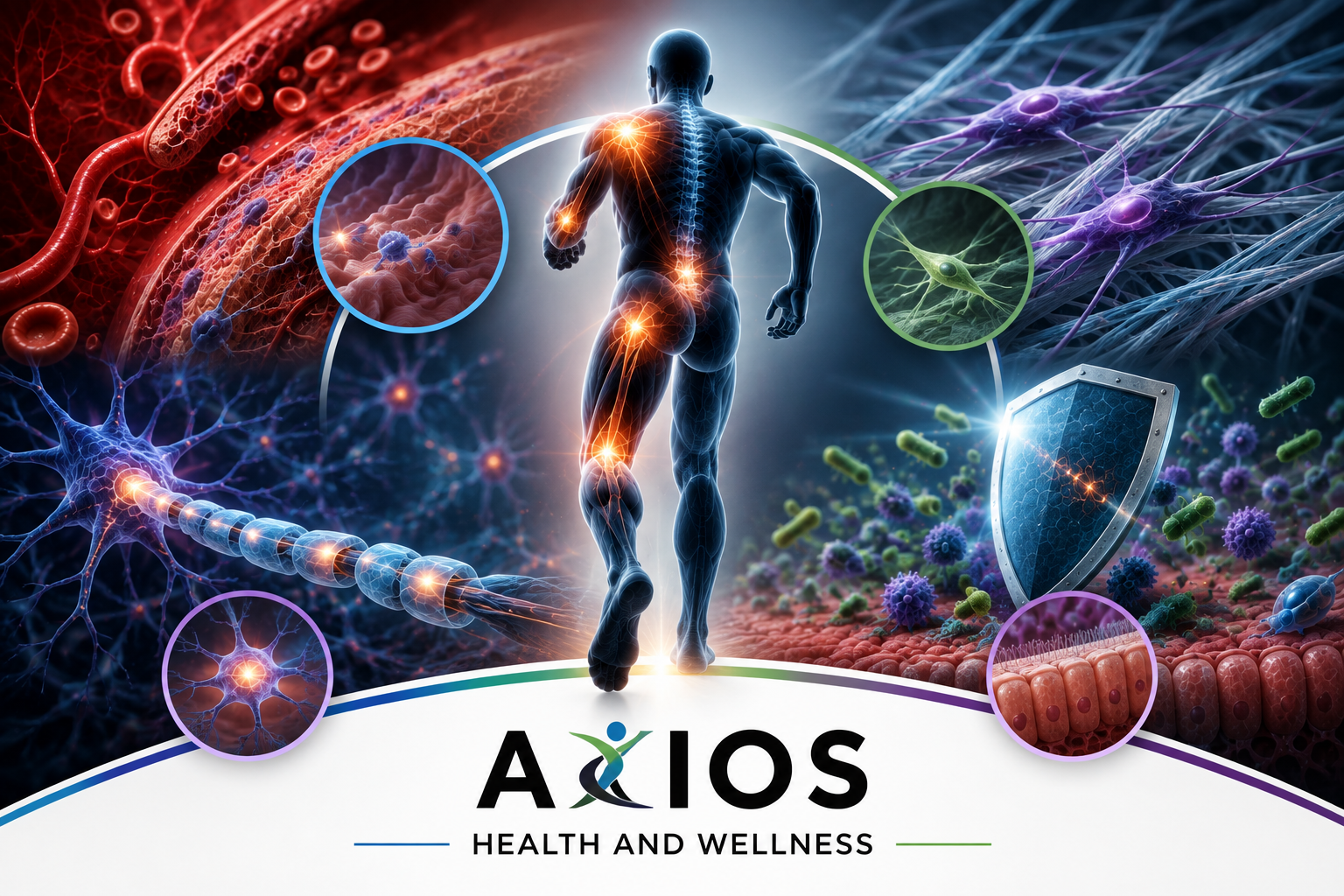
This is why the term healing peptides can be a little misleading. BPC-157, TB-500, ARA-290, and LL-37 may all be discussed for healing and recovery, but they do not work in the same way. BPC-157 and TB-500 are more closely associated with tissue repair and remodeling. ARA-290 brings nerve recovery and control of inflammation into the picture. LL-37 adds another layer by helping the body defend against microorganisms while supporting the immune response and repair of damaged barriers. Understanding these differences changes the question from “Which healing peptide is best?” to “What is interfering with healing, and which part of the recovery process are we trying to support?”
BPC-157: Supporting Tissue and Gut Repair
BPC-157 is one of the better-known peptides associated with healing and recovery, particularly for tendons, ligaments, muscles, and the gastrointestinal tract. To understand why, it helps to think about what actually has to happen after tissue is injured.
Imagine a damaged construction site. Before rebuilding can really begin, you need roads to bring in supplies, workers who can reach the damaged area, and a way for those workers to organize the new structure. Healing tissue faces many of the same challenges. It needs blood flow to deliver oxygen and nutrients, repair cells have to move into the injured area, and fibroblasts have to begin producing and organizing collagen.
BPC-157 appears to influence several parts of this process. It affects signaling involved in angiogenesis, or the development and repair of blood vessels, helping establish the “roads” that supply recovering tissue. It also influences fibroblast migration, helping these important repair cells move into the injured area. Once there, fibroblasts help produce and organize the collagen that gives tendons, ligaments, and other connective tissues their structure. BPC-157 also appears to influence inflammatory and nitric-oxide signaling, which can affect blood flow and the overall environment in which healing takes place.
This same repair biology helps explain the interest in BPC-157 for the gut. The intestinal lining is constantly being exposed to food, digestive chemicals, microorganisms, and inflammation. When that protective lining becomes injured, cells have to migrate, restore the barrier, and rebuild the damaged tissue. BPC-157 has demonstrated protective and healing effects in several areas of the gastrointestinal tract in experimental research.
So rather than thinking of BPC-157 as something that simply “makes an injury heal,” think of it as potentially helping organize the environment the body needs to repair damaged tissue—improving access to the injury, helping repair cells get where they need to go, and supporting the rebuilding process once they arrive.
TB-500: Helping Repair Cells Get Where They Need to Go
If BPC-157 helps create a better environment for healing, TB-500 brings another important part of the repair process into the picture: getting repair cells where they need to go. TB-500 is related to thymosin beta-4, a naturally occurring peptide involved in tissue repair and regeneration.
Think about the same construction site. Having roads and supplies available does not help much if the workers cannot actually reach the damaged area. Healing tissue has a similar challenge. Cells involved in repair need to move into the injury, organize themselves, and begin rebuilding the damaged tissue.
One way thymosin beta-4 helps with this process involves a protein inside our cells called actin. Actin acts like a flexible internal framework. Cells can rearrange this framework to change their shape and move through tissue. Thymosin beta-4 helps regulate actin, which is one reason it has such an important connection to cell movement during healing.
But movement is only part of the process. Thymosin beta-4 has also been studied for its effects on new blood-vessel formation, inflammation, cell survival, and tissue remodeling. Together, these actions may help repair cells reach an injury and create the conditions needed to rebuild and reorganize damaged tissue.
This is why BPC-157 and TB-500 are often discussed together, but they should not be thought of as doing the same job. Using our construction analogy, BPC-157 helps create and support the repair environment, while TB-500 helps the workers move into position and participate in rebuilding the damaged tissue.
ARA-290: When Healing Involves Nerves
BPC-157 and TB-500 bring us into the repair of damaged tissue, but nerve injuries create a different problem. A tendon or muscle needs to rebuild its structure. An injured nerve also has to restore its ability to communicate normally.
Think of a nerve like an electrical wire carrying information between the body and the brain. When that wire becomes damaged or irritated, the signal can become distorted. Instead of normal sensation, the nerve may begin producing pain, burning, tingling, or numbness. Inflammation around the nerve can keep those abnormal signals going and make recovery more difficult.
ARA-290 works through a pathway called the Innate Repair Receptor (IRR). When tissue is injured, this receptor helps activate signals that protect injured cells, reduce damaging inflammation, and support repair. Rather than simply blocking a pain signal, ARA-290 is being studied for its ability to improve the environment around an injured nerve and potentially support the recovery process.
What makes ARA-290 particularly interesting is the human research involving small-fiber neuropathy. Studies have reported improvements in nerve-related symptoms such as pain, burning, and tingling, along with measurable changes in small nerve fibers. This suggests ARA-290 may be doing more than changing how an injured nerve feels—it may also be influencing the nerve-repair process itself.
LL-37: When Healing Also Requires Defense
LL-37 brings us to another type of healing. Sometimes the body is not only trying to repair damaged tissue—it also has to protect that tissue from microorganisms while it heals. This is especially important at protective surfaces such as the skin and the lining of the gut.
Think of our construction site again, but this time the damage has created an opening in the security fence. The workers need to rebuild the damaged area while also preventing unwanted visitors from getting through. LL-37 helps the body manage both problems.
LL-37 is a naturally occurring host-defense peptide. It can interact directly with certain microorganisms and interfere with biofilms, the protective communities that bacteria and other microorganisms can build around themselves. At the same time, LL-37 helps coordinate the immune response and influences the epithelial cells responsible for rebuilding damaged protective barriers.
This is what makes LL-37 so different. The body isn’t just trying to rebuild damaged tissue—it may be trying to defend that tissue at the same time. LL-37 connects microbial defense, immune regulation, and tissue repair, making it particularly interesting when these processes overlap, such as with chronic wounds or damage to the gut lining.
Why the Type of Injury Matters
Looking at these four peptides together makes one thing clear: healing peptides are not interchangeable.
BPC-157 may help create an environment that supports tissue repair by influencing blood vessels, repair cells, and connective tissue. TB-500 adds another piece by helping cells move into the injured area and participate in remodeling. ARA-290 shifts the focus toward injured nerves and the inflammation surrounding them. LL-37 becomes more relevant when healing also involves microorganisms, immune activity, and a damaged protective barrier.
This is why choosing a peptide should start with understanding what tissue is injured and what may be preventing it from recovering. A chronic tendon injury is different from small-fiber neuropathy, and both are very different from a wound that is struggling to close.
Sometimes more than one part of the healing process needs support. This is one reason clinicians may occasionally combine peptides such as BPC-157 and TB-500 when their actions may complement one another. But adding more peptides does not automatically mean better healing. The goal is to match the treatment to the biology of the injury.
The Bottom Line
That is why I believe peptide therapy should start with a different question: What is keeping this tissue from healing? Once we understand the injury and what may be slowing recovery, we can determine whether a peptide fits the problem and which one makes the most sense.
If you have an injury that is taking longer than expected to heal, ongoing nerve-related symptoms, or another condition where recovery has stalled, the first step is understanding why the body is struggling to recover.
At Axios Health & Wellness, we look at the type of tissue involved, what may be interfering with healing, and whether peptide therapy makes sense as part of the overall treatment plan. The goal is not simply to prescribe a “healing peptide,” but to choose a treatment that matches what your body is actually trying to repair.
Schedule a consultation with Axios Health & Wellness to learn whether peptide therapy may be appropriate for your recovery.
About the Authors
This article was co-written by Jay Griffin, FNP-C, CRNFA, and Lacey Fisher, FNP-BC, PMHNP-BC.
Jay and Lacey are board-certified Family Nurse Practitioners and hormone optimization specialists at Axios Health & Wellness. Together, they bring decades of clinical experience in hormone replacement therapy, thyroid optimization, peptide therapy, medical weight loss, and regenerative medicine.
Their goal is to help patients better understand the science behind their health and make informed decisions through evidence-based, personalized care.
Jay Griffin, FNP-C, CRNFA
Board-Certified Family Nurse Practitioner
Hormone Optimization Specialist
Founder, Axios Health & Wellness
Lacey Fisher, FNP-BC, PMHNP-BC
Board-Certified Family Nurse Practitioner
Board-Certified Psychiatric Mental Health Nurse Practitioner
Hormone Optimization Specialist
Axios Health & Wellness
Frequently asked questions
What are healing peptides?
Healing peptides are short chains of amino acids that may influence different processes the body uses during recovery. Depending on the peptide, these may include blood-vessel formation, movement of repair cells, inflammation, nerve recovery, immune regulation, and tissue remodeling. Because each peptide works differently, the best choice depends on the type of tissue involved and what may be interfering with healing.
What is the difference between BPC-157 and TB-500?
BPC-157 and TB-500 may support different parts of tissue repair. BPC-157 appears to help create an environment that supports healing, including blood flow and the activity of repair cells. TB-500 is related to thymosin beta-4 and is more closely associated with cell movement and tissue remodeling. This is why clinicians sometimes consider the two peptides together for musculoskeletal injuries.
Which peptide may be considered when nerve pain is part of the problem?
ARA-290 has been studied for its potential role in nerve protection and recovery, particularly in small-fiber neuropathy. It works through the Innate Repair Receptor (IRR), which helps protect injured cells and control inflammation. Human studies have reported improvements in nerve-related symptoms such as pain, burning, and tingling, along with measurable changes in small nerve fibers.
What makes LL-37 different from other healing peptides?
LL-37 is a naturally occurring host-defense peptide.
In addition to supporting tissue and barrier repair, LL-37 can interact with microorganisms and interfere with biofilms. It may also help regulate the immune response. This makes LL-37 particularly interesting when healing, immune activity, and microbial exposure occur together. This can happen with chronic wounds or damage to protective barriers.
Can healing peptides be used together?
Sometimes. BPC-157 and TB-500 may work well together because each influences a different part of the repair process. However, using more peptides does not automatically mean better healing. The goal is to identify the injured tissue, understand what may be limiting recovery, and choose the peptide or combination that best fits the problem.